Federal judge fines top officials $12,500 after ICE misses release order
A federal judge in Pittsburgh held the Attorney General and DHS Secretary in civil contempt after body camera footage failed to show an arrested man's detention, leading to a finding that agencies disregarded court orders.
By Elena Vargas ·
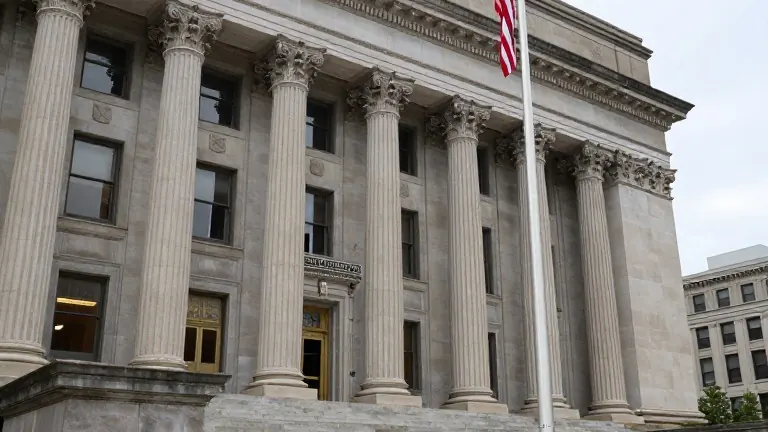
A federal judge in Pittsburgh imposed financial penalties on three high-ranking officials this week after determining that U.S. Immigration and Customs Enforcement ignored a court order to release a detained man. U.S. Magistrate Judge Maureen Kelly held Attorney General Todd Blanche, Homeland Security Secretary Markwayne Mullin, and acting ICE field office director John E. Rife in civil contempt. The ruling follows a dispute over the rearrest of Nain Vasquez Gonzalez, an El Salvadoran citizen who was swept up by agents in New Jersey despite a prior court order freeing him from detention.
Kelly’s decision rests on the agency’s failure to produce clear evidence of what happened during the June 26 arrest. Although ICE submitted body camera footage from five agents involved in a nationwide enforcement surge, none of the clips showed Vasquez Gonzalez being taken into custody. The missing video contradicted the government’s narrative that the arrest was a simple error. Kelly described the government’s attempts to comply with her orders as involving inconsistent stories and dubious excuses.
The judge identified two possible explanations for the gaps in the record. Either the officials willfully tried to hide the circumstances of the arrest and the identities of the agents, or they were unable to maintain proper records and use their own equipment. Kelly rejected the government’s claim that the arresting officer’s camera was not activated because he had left it on the previous night. She called that a preventable error for which there was no excuse, but she found the broader pattern of concealment more troubling.
Vasquez Gonzalez, who entered the United States as a minor in 2016, had been detained for 38 months before Kelly ordered his release in April. She found that his pre-removal detention had become so prolonged that it offended due process. However, on June 26, agents in Fairview, New Jersey, stopped him while he waited for a bus to a doctor’s appointment. When he told them he had a release order in his wallet, they did not check it. One agent reportedly told him the paper did not matter because they were just doing their job.
He was held for 11 hours before his attorney filed a motion to free him. The judge found that the government’s responses to her subsequent requests for information were evasive. When asked for the names of the officers, the agency initially said it could not provide them. When asked for the video, the government sought to seal the footage, a move Kelly denied. She criticized the use of masks by agents during operations, writing that the United States does not have a secret police force and that such attempts to cloak identities are deeply troubling.
The sanctions require the government officials to pay attorney fees and costs associated with the wrongful arrest. Immigration attorney Adrian Roe noted that the court is treating the government like any other litigant who fails to follow court orders. He said the ruling demonstrates that the rule of law remains active in the Western District of Pennsylvania. The judge’s opinion also criticized sworn declarations made by government agents who were not present at the scene, calling the practice disconcerting and potentially perjury.
The Department of Justice did not return a request for comment. The U.S. Attorney’s Office in Pittsburgh, which represented the federal government in the case, declined to comment. Assistant U.S. Attorney Heidi Grogan argued in filings that the failure to answer the court resulted from a scramble to provide answers quickly after a mistake. She said the agency released Vasquez Gonzalez as soon as it realized its error. Judge Kelly was not convinced by this explanation, citing the pattern of shifting accounts and the lack of credible justification for the rearrest.
The case underscores the tension between federal immigration enforcement operations and the procedural requirements of the courts. By holding the top officials personally responsible in a civil capacity, Kelly aimed to ensure future compliance. The ruling sends a direct message that agencies cannot disregard judicial orders without facing financial consequences. The financial burden of $12,500 in sanctions will be paid by the officials named in the contempt finding.
Source: Pittsburgh Tribune-Review