Middle East Analysts Weigh Democratic Sweep of Congress and El-Sayed's Historic Senate Win
From Cairo to the Gulf, analysts see the US midterm results as a potential turning point for military aid, ties with Israel, and the Iran confrontation, while doubting Arab governments will shift their strategic course.
By News Media House Staff ·
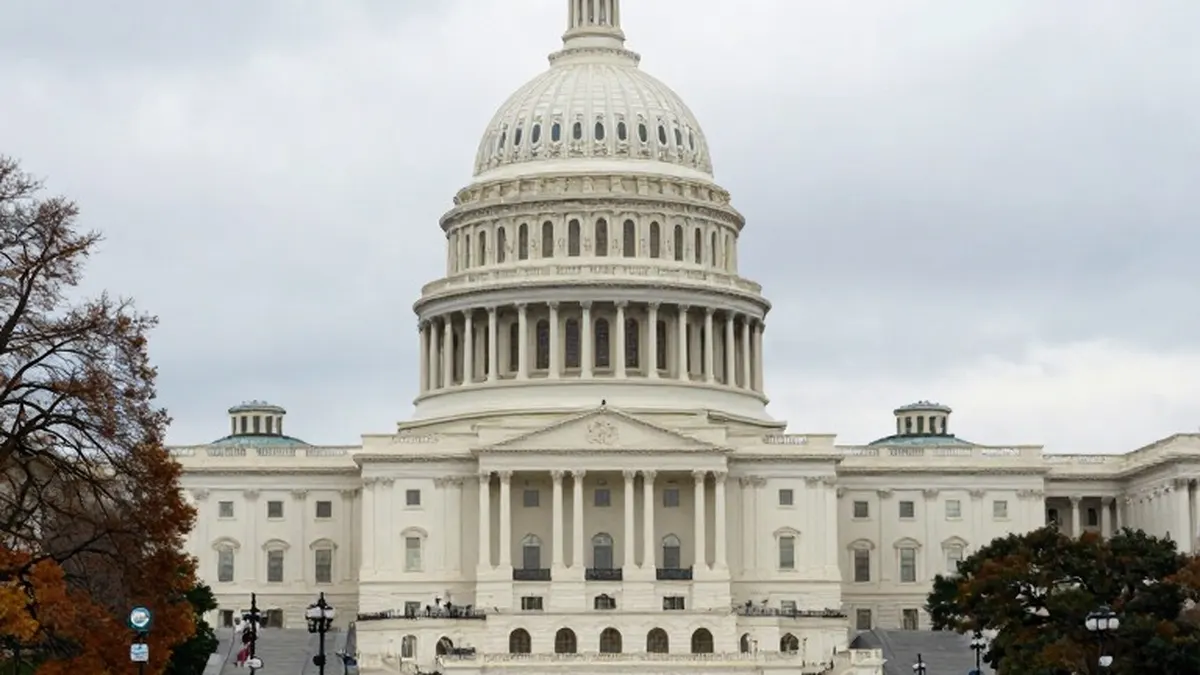
The Democratic Party's sweep of the US midterm elections on November 3, securing control of both the House of Representatives and the Senate, has raised questions across the Middle East about the future of Washington's regional policies, its military commitments, and the balance of power between the White House and Congress.
Among the most closely watched results was Abdul El-Sayed's victory in Michigan, where the American politician of Egyptian descent defeated Republican Mike Rogers to become the first Muslim elected to the US Senate. His campaign, in which military aid to Israel, the war with Iran, and political lobbying groups featured prominently, drew heavy spending from opponents aligned with AIPAC.
For Egypt, his victory presents a more complicated picture. Samir Ragheb, president of the Arab Foundation for Development and Strategic Studies, told The Media Line that El-Sayed's positions on Gaza and his opposition to the Iran war won him "wide sympathy in the Arab street, the Egyptian street included," but said remarks made after his August primary win changed that. El-Sayed said his family came from "a country without democracy" and pledged not to fund what he called a "strangling grip" on the Egyptian people, comments that split Egyptian public opinion.
Ragheb cautioned against assuming a politician's ethnic or religious identity would translate into favorable policy toward his family's country of origin. "He is one of a hundred senators. We do not see him as an enemy or as a friend," he said, adding that El-Sayed is "American first, born and raised in the US, and his loyalties lie there."
A former Bahraini diplomat, requesting anonymity, told The Media Line the Democratic wins "come as no surprise to those tracking recent US polling and public sentiment." The incoming Congress, which takes office on January 3, 2027, will gain greater authority to conduct oversight, investigate administration decisions, and influence federal spending, though President Donald Trump keeps significant power over diplomacy, military operations, and foreign policy for two more years.
For Cairo, the stakes center on assistance. Congress approved $1.375 billion in Foreign Military Financing for Egypt for fiscal 2026, with $320 million subject to human rights and other conditions, and in October the Trump administration waived such conditions on $320 million in fiscal 2025 aid, citing Egypt's contribution to regional security after the escalation involving Iran. The 2026 allocation was $75 million above Egypt's longstanding annual baseline of roughly $1.3 billion.
Ragheb argued Egypt has prepared for every outcome. "On aid, Egypt is ready for every scenario. America gains from having Egypt as a friend, more than Egypt gains from the aid. The Chinese and Russian options are open," he said, raising the possibility of buying tanker aircraft from China and the S-400 and Su-35 from Russia. His references describe potential procurement alternatives rather than confirmed purchases.
The results also reverberated on Israel policy. On October 21, AIPAC announced it would stop directly endorsing candidates and making direct political action committee contributions, while its affiliated super PAC would continue operating. On election night, Trump said the United States would halt roughly $4 billion in annual assistance to Israel after the end of 2026, citing an understanding with Prime Minister Benjamin Netanyahu, despite an existing agreement providing $3.8 billion annually through September 2028. He did not explain how the funding would end ahead of that timetable. The Bahraini diplomat said the developments show "the US-Israel partnership is no longer immune to public debate."
On Iran, the diplomat said Tehran "seems to have been watching these developments closely," relying on strategic patience, asymmetric attrition, maritime friction, and high energy prices, and could view a constrained Republican leadership and stronger progressive presence in Washington as "a tactical win in the current conflict." He warned the transition window before the new Congress takes office remains critical, saying a bold military move against Iran, and any subsequent retaliation across the Gulf, "remains possible."
Arab states, meanwhile, are already hedging. Saudi Arabia, Pakistan, and Turkey signed a joint defense agreement in August aimed at strengthening cooperation and collective deterrence, and Ragheb said the region "has already adjusted" to a Washington that "stepped back from defending its friends," noting that Egypt works with Saudi Arabia.
Originally published by News Media House · Source: The Jerusalem Post