GOP officials back Democratic Senate and governor candidates
Recent endorsements in Alaska, Kansas, and Texas show growing cross-party support, though experts warn the impact on final vote counts is likely small.
By Henry Wilson ·
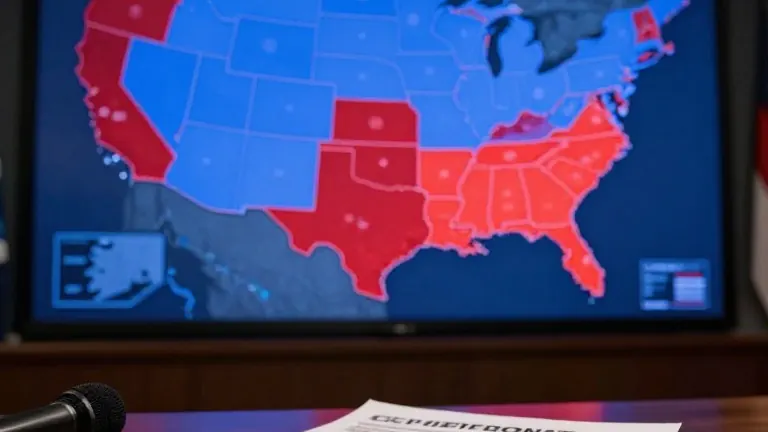
With the November midterm elections approaching, several candidates are emphasizing support from the opposing party. While these endorsements have generated attention, political analysts suggest the number of voters switching sides may not be large enough to decide the outcome in most states.
In Alaska, Republican Sen. Lisa Murkowski endorsed Democratic gubernatorial candidate Jonathan Kreiss-Tomkins on Tuesday. Her support marks a notable break from her own party's nominee in that race.
Cross-party backing is also visible in the Senate races in Kansas and Texas. In Kansas, former Republican governors Bill Graves and Mike Hayden announced their support for Democratic candidate Adam Hamilton in September and October. In Texas, the campaign for Democratic Senate candidate James Talarico reported that more than two dozen former GOP officials have endorsed him.
Kel Seliger, a former GOP state senator, joined Talarico's supporters this week. He chose Talarico over Republican Attorney General Ken Paxton, citing his personal working relationship with both men.
"I’ve served with both people," Seliger said. "James Talarico is not some wild-eyed socialist and and he may believe in a lot of things that Democratic Party believes in that I don’t. But I think he’s going to be honest. And I think he’s going to be frank and direct. I think that the things that he does are going to be what is best for Texas. Not what’s best for Elon Musk."
Republican officials acknowledge that their candidates are also attracting Democratic voters. Natalie Baldassarre, the national press secretary for the Republican National Committee, pointed to the "Democrats for Mike Rogers" coalition in Michigan. She noted that Rogers is facing Abdul El-Sayed in a competitive race, similar to the Talarico versus Paxton contest in Texas.
Joshua Blank, research director for the Texas Politics Project, cautioned that cross-party voting usually affects only a small slice of the electorate. "We’re not talking about a large group of Republicans crossing party lines to vote for Democrats, or a large group of Democrats possibly crossing party lines to vote for Republicans," he said. He added that if the races are statistically tied, these idiosyncratic voting behaviors could determine the winner.
Source: Atlanta News First