
Suicide Risk: Forensic Psychiatrist Testifies in Farwell Trial
Dr. Melissa Piasecki assessed Sandra Birchmore’s history to evaluate her likelihood of self-harm during the federal murder trial in Massachusetts.
By Aisha Khan ·
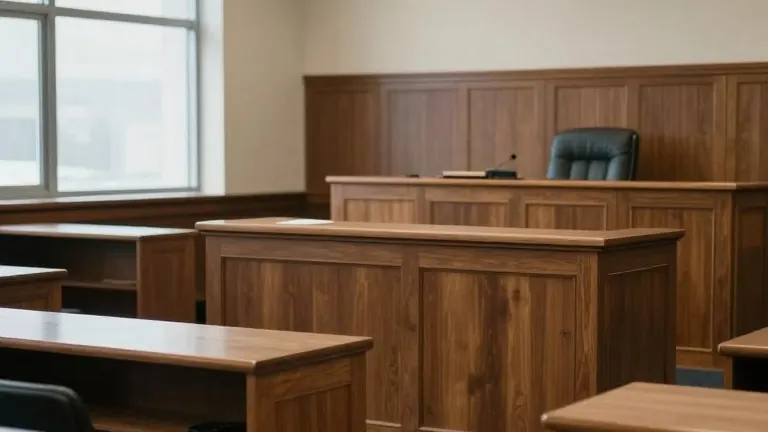
Dr. Melissa Piasecki, a board certified forensic psychiatrist, took the stand on Friday to evaluate the mental state of Sandra Birchmore in the trial of Matthew Farwell. The ex-Stoughton police officer is accused of strangling Birchmore at her Canton apartment in early 2021. Prosecutors allege Farwell staged the death as a suicide after Birchmore told him she was pregnant. DNA evidence later confirmed that Farwell was not the biological father of the unborn child.
The defense called Piasecki to analyze Birchmore’s risk factors for suicide. She reviewed medical records, bank statements, FBI reports, and witness transcripts spanning Birchmore’s childhood and adulthood. Piasecki stated that she had reviewed most of the prosecution’s testimony but had not yet examined all witness accounts. Her assessment focused on the scientific components of suicide to help the jury understand the defendant’s argument.
Piasecki assigned Birchmore a risk score of 4, which she described as a level that elevates the chance of a suicide attempt. She cited Birchmore’s household dysfunction, including her father’s history of alcohol abuse and his reported attempts to exchange the child due to his addiction. The expert also noted that Birchmore’s pregnancy at the time of her death further increased her statistical risk of suicide.
The witness detailed Birchmore’s medical history, which included childhood diagnoses of attention deficit disorder and an unspecified mood disorder. Birchmore was prescribed Ritalin, a mood stabilizer, and Prozac. Piasecki also pointed to Birchmore’s struggle with alcohol that began at age 14 as a contributing factor in her risk profile.
During the testimony, the court displayed a journal entry Birchmore wrote five years before her death. The entry listed methods for committing suicide. Piasecki explained that such planning is a recognized risk factor for future attempts. She stated that once an individual views suicide as an option, they have opened a door that will always stay open.
The jury also reviewed a separate list from Birchmore’s journal titled why not to commit suicide. The entry outlined reasons for living, including her career, personal goals, and the fact that she was nearly finished with school. These documents were used to illustrate the internal conflict Birchmore faced prior to her death.
The case has drawn national attention as the latest high-profile Massachusetts criminal trial following the recent proceedings against Lindsay Clancy and Karen Read. Farwell, who served as a police Explorers volunteer, allegedly used his authority to groom and sexually exploit Birchmore when she was 15. He continued the relationship after she became an adult. The defense indicated they have approximately one week of witnesses remaining, suggesting closing arguments could occur next week.
Source: WBTS-CD