
Organizer Kacy Paide Recommends Tackling Paperwork One Small Pile at a Time
A professional organizer with twenty years of experience offers a method for sorting documents that prioritizes user control and low-stress habits.
By Elena Vargas ·
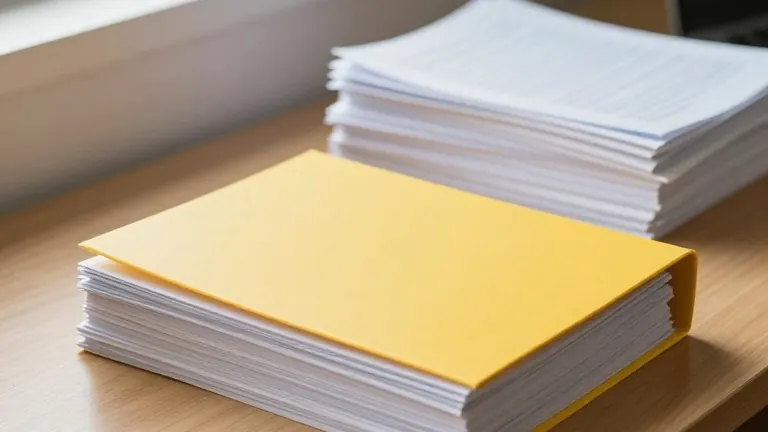
Kacy Paide has spent more than two decades helping clients sort through their paper clutter.
The professional organizer says the process does not require speed or a rigid structure. She tells clients, "You're in control of your paper, and it's up to you how fast you want to get through it."
Paide advises people to ignore the boxes in the garage or the office closet for now. Instead, she suggests starting with the papers already on the desk or dining table. "The documents and action items that are on fire tend to be closest to us," Paide says.
The first step is to divide those visible papers into two stacks: active and inactive. Active documents require a follow-up action, such as making a phone call or paying a bill. Inactive documents, including receipts, birth certificates, and sentimental items like a Valentine's Day card, can be set aside for later.
For the active pile, Paide recommends writing the due date boldly on a sticky note with a permanent marker. She attaches this note directly to the document. She suggests being specific with deadlines, using phrases like "due by Nov. 15" or "start no later than 12/1." She warns that vague labels like "urgent" or "due now" lose their meaning quickly.
Once the immediate tasks are identified, the next step is creating a filing system for long-term storage. This includes passports, product manuals, tax records, and medical files. Paide notes that the system can be as simple or complex as the user prefers. Alphabetizing, color-coding, or labeling are all valid options, but the system must be one the user will actually maintain.
Paide prefers to store critical documents like passports and marriage certificates in a brightly colored folder. She places this folder at the front or back of a file box, acting as a bookend to the rest of the system. This makes the important items easy to spot without rifling through other papers.
She uses simple file folders and labels them with sticky notes and permanent markers. This allows her to change the organization later without discarding the physical folders. She also recommends using attractive file boxes on bookshelves. "Then you have this visual filing system that's also beautiful and approachable," Paide says.
Not every piece of paper needs to be kept. Paide suggests asking if you would ever need to produce the document in the future. If not, it can be discarded. The Federal Trade Commission advises destroying documents that contain sensitive information, such as account numbers, birth dates, passwords, signatures, or Social Security numbers, to protect against identity theft.
For sentimental items like old letters or divorce papers, Paide suggests bringing in a family member or friend to help. She encourages people to voice their thoughts about the items as they sort. In her experience, people reach a conclusion about keeping or tossing these papers quickly. She advises working in short sessions of 25 minutes and treating organization as an ongoing process rather than a one-time event.
Source: WBAA