
Unpaid NC Supervisors Manage Millions in Flood Recovery Funds
Haywood County Chair Bill Yarborough details how non-salaried officials direct state and federal resources to repair waterways damaged by Tropical Storm Fred and Hurricane Helene.
By Aisha Khan ·
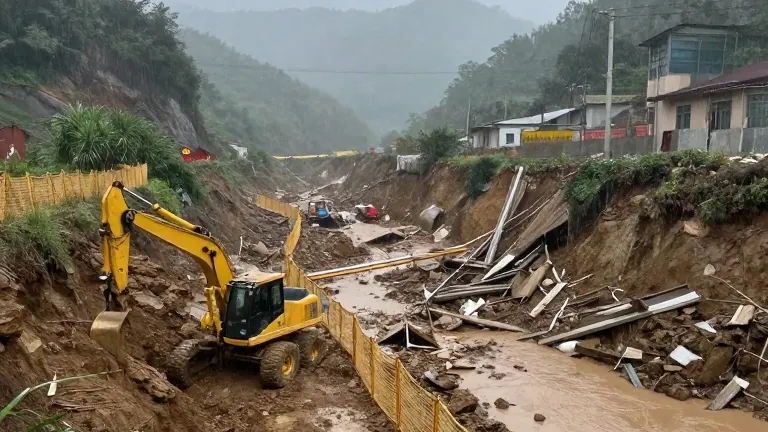
Bill Yarborough, who chairs the Haywood County Soil and Water Conservation District, directs the flow of federal and state funds to repair waterways damaged by Tropical Storm Fred and Hurricane Helene. The office holds no salary and receives little public attention, yet it functions as a primary mechanism for mountain flood recovery in North Carolina.
Yarborough is not running for re-election this cycle. He describes the district as a locally led group that identifies specific county needs and secures solutions. Conservation work is central to his background, as his father previously served as a district supervisor. Yarborough cited the first pond built on his family farm with district assistance as the catalyst for his career at the North Carolina Department of Agriculture.
The organization traces its origins to 1937 in Anson County. Hugh Hammond Bennett, an Anson County native, championed the creation of the first conservation district during the Dust Bowl. He sought to address widespread erosion that was ruining farmland. Yarborough noted that Bennett decided action was necessary. Today, nearly 3,000 districts operate nationwide. In North Carolina, every county belongs to one of these local government units.
Most districts in the state are governed by five unpaid supervisors. Three positions are filled through nonpartisan elections, while the state appoints the other two. All terms last four years. Supervisors determine district priorities and decide how to allocate local, state, and federal money. Funds typically support farmers with projects such as fencing cattle out of creeks or planting cover crops to stabilize soil.
District staff assist landowners in planning these projects and locating cost-share funding. The state Agriculture Cost Share Program reimburses up to 75% of a project's average cost. Yarborough stated the goal is to prevent issues before they occur. He compared the work to firefighting, where the objective is to help people understand preventive measures rather than just extinguishing flames.
Recent storms have forced districts to act on a larger scale. Tropical Storm Fred flooded the Pigeon River in 2021, killing six people in Haywood County. The district started a pilot program afterward that used staff from other areas to tally damage, estimate repair costs, and submit funding requests. Yarborough said repairs from Fred were still ongoing when Hurricane Helene struck. The counties used lessons from the earlier storm to manage the larger response.
Districts in Henderson and Transylvania counties have sought federal emergency watershed funding. They aim to clear debris-clogged streams and repair unstable banks that threaten homes, roads, and bridges. State money supports similar repairs elsewhere in the region. Yarborough said it will take several years to complete the necessary work. Supervisors elected this fall will help shape that effort.
Yarborough advises voters to ask candidates what the county needs most and what the district is doing now. He also suggests voters consider if they are getting value from their tax payments. He described the work as human conservation, noting that soil and water are basic needs. Early voting ends at 3 p.m. on Saturday, Oct. 31. Election Day is Tuesday, Nov. 3.
Source: WUNC