Audio Recordings Reveal Control Center Cleared Train While Another Was Stalled
Recordings show drivers were told to proceed at normal speed despite a reported failure in the automatic signalling system ahead.
By Tyler Anderson ·
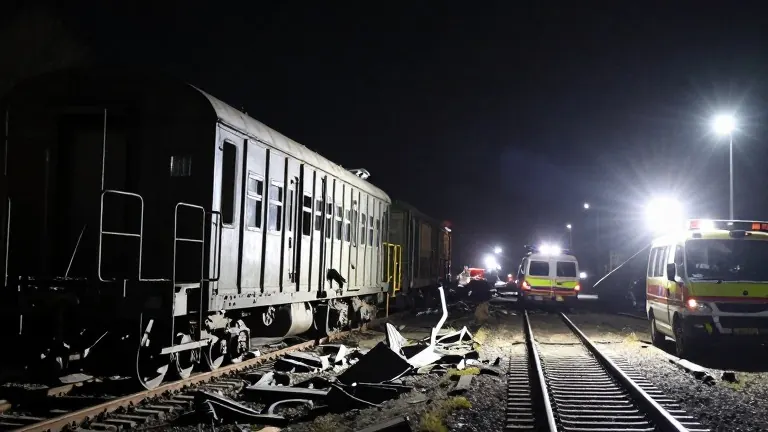
Audio recordings released by Spanish media outlets detail the final communications between railway control operators and two train drivers before a collision killed at least 69 people on Wednesday morning. The files, published by El Pais and RTVE, capture the minutes leading up to the disaster on the line connecting Madrid and Seville.
A state-owned Renfe train carrying 397 passengers was travelling behind a private Iryo train that had 147 people on board. The Iryo train had halted because a computer failure in the automatic signalling system forced all trains to stop in that sector. Despite this, the control center in Madrid gave the following Renfe train clearance to move forward.
Transport Minister Óscar Puente stated on Wednesday that the decision to instruct the trains to proceed without speed restrictions was inexplicable. The audio shows a control operator telling the Renfe driver to continue the journey under Lateral Signalling Block, a backup system used when primary data transmission fails. The driver asked if they should travel at normal speed, and the operator confirmed with a simple yes.
In a separate recording, the Iryo driver reported that communication with the train-control system was lost and the train was not moving. The driver specified that the vehicle was stationary in front of the entry signal at Urda. After several exchanges, the control center instructed the driver to resume the journey normally. The Iryo driver later reported again that the train would not allow them to control the security system, explaining why they remained stopped in front of the signal.
The final recording suggests the controller had been notified that the Iryo train was still stationary as the Renfe train approached. Iryo said its train was struck from behind by the other vehicle. Officials are now investigating the cause of the crash, which is the worst rail disaster in Spain since 2013, when 80 people died near Santiago de Compostela.
Prime Minister Pedro Sánchez said the whole of Spain is grieving and described the pain as immense. He called it unacceptable that Spain has suffered two serious rail disasters this year, following a crash in January on the same line that killed 46 people. Emergency crews worked through the night under floodlights to cut open metal carriages, with many victims still unidentified. Hundreds of personnel, including drones and helicopters, are deployed to the site to remove rubble and find survivors.
Around 1,500 people gathered outside the Spanish Transport Ministry building in Madrid overnight to demand resignations for Sánchez and Puente. Police used tear gas to disperse crowds after protesters threw bottles and flares, though no injuries or arrests were reported. Most political parties suspended campaigning for upcoming elections, with the exception of the far-right Vox party. Its leader, Santiago Abascal, said the party would not use mourning to silence criticism of the country's rail infrastructure.
Rail drivers are scheduled to strike on Thursday in defense of railway safety, according to the Spanish Union of Railway Drivers. Alberto Núñez Feijóo, leader of the opposition People's Party, said Spain has the right to know what is happening with its infrastructure. The Civil Guard has set up bureaus in Madrid, Toledo, Seville, and Córdoba to investigate missing persons and take DNA samples. EU flags are flying at half-mast in Brussels as a sign of solidarity during Spain's three days of national mourning.
Source: BBC News