Double failure in Spain's rail system leaves 69 dead after high-speed collision
Transportation minister says a computer glitch and a controller's error allowed a Renfe train to speed past a red light into a stopped Iryo train near Toledo.
By Henry Wilson ·
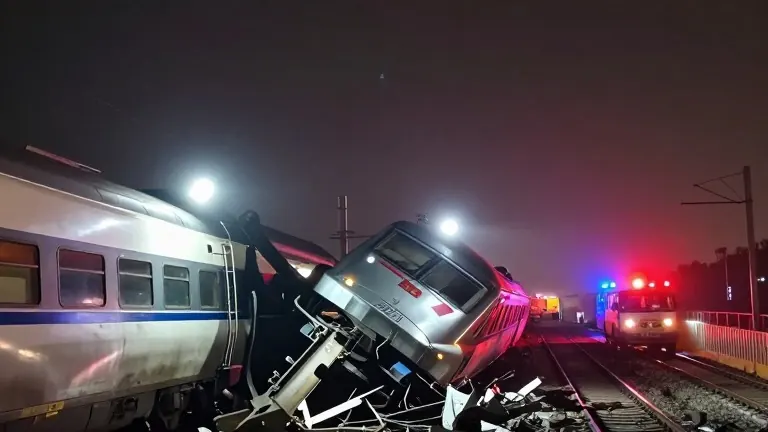
A high-speed Renfe train traveling south from Madrid struck a stationary Iryo train near the town of Urda on Wednesday, killing at least 69 people and injuring more than 100. The collision occurred on the rail line connecting Madrid and Seville, marking the third fatal rail incident in Spain this year.
Transportation Minister Óscar Puente attributed the crash to a combination of technical and human failures. A fault in the LZB train management safety system disrupted traffic across a 63-kilometer stretch of track, causing trains to stop automatically. State railway manager ADIF then took manual control of the network. Despite a red light prohibiting movement, a train controller issued an erroneous order allowing the Renfe train to proceed without speed restrictions.
According to Puente, the Renfe train resumed travel between 8:36 a.m. and 8:52 a.m. local time, reaching speeds of approximately 124 miles per hour before hitting the stopped Iryo train. The minister described the authorization to move as a decision made under inexplicable circumstances. The Renfe train carried 393 passengers, while the Iryo train had 151 on board. Of the fatalities, 24 were on the Renfe service and 44 were on the Iryo service.
Survivors described the impact as chaotic, with passengers thrown from their seats and debris penetrating the carriages. One passenger, Patricia, said her train had been stopped for about 20 minutes before departing and crashing within three minutes of moving. Another survivor, Yoander, 25, reported waking up during the collision and suffering injuries to his face and leg. Emergency responders, including more than 500 personnel, three helicopters, and several drones, worked through the night to extract victims from the wreckage.
The incident has intensified scrutiny of Spain's rail infrastructure following a January crash near Adamuz that killed more than 40 people and a separate derailment near Barcelona that killed a driver. While the January accident involved a track break, this collision stemmed from safety system errors and manual override decisions. The train drivers' union Semaf is proceeding with a nationwide strike Thursday to demand stronger safety measures, citing concerns over track wear and computer reliability.
Regional authorities have reported that 60 of the 110 hospitalized injured have been released. The Spanish Civil Guard has opened four offices in different cities to identify victims, and the regional government has called for blood donations in Toledo, Alcázar de San Juan, and Ciudad Real. Prime Minister Pedro Sánchez visited the scene and stated that if negligence is found, it will be addressed with utmost firmness. The US State Department confirmed that several American citizens were injured in the crash.
Source: KTRK-TV