Netanyahu and Eisenkot Blocs Stuck at 103 Seats After Israel Vote
Arab parties hold the 17 seats needed for a majority, but neither major camp has pledged to form a coalition with them.
By Henry Wilson ·
Israel's election produced no clear winner as of Wednesday afternoon.
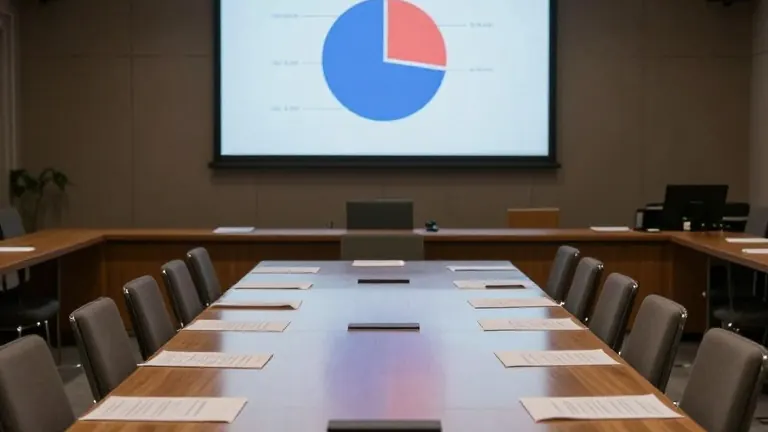
With roughly 80 percent of ballots counted, neither the governing bloc nor the opposition secured the 61 seats required for a majority in the 120-seat Knesset. The outgoing coalition led by Prime Minister Benjamin Netanyahu and centered on his Likud party holds 54 seats. The opposition alliance, led by former military chief of staff Gadi Eisenkot, holds 49 seats.
The opposition alliance spans a wide political range, from Yair Golan's left-wing Democrats to Avigdor Lieberman's hard-right Yisrael Beiteinu. Neither bloc appears willing to partner with the Arab-dominated Ra'am and Joint List. Together, those two parties hold 17 seats, a number sufficient to give either major camp the majority needed to appoint a speaker, pass legislation, and form a government.
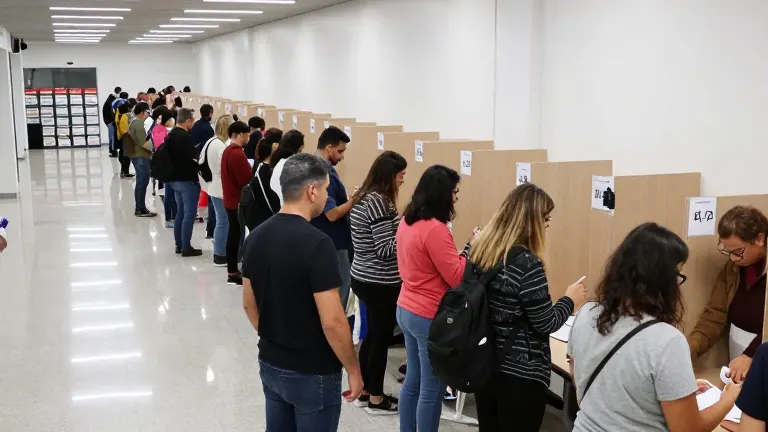
The final numbers are not yet set. The complete tally is expected by Friday, and official results will be published on November 4. Turnout for Tuesday's vote reached 77.7 percent of eligible voters, marking the highest participation since 1999. Among Palestinian citizens of Israel, who comprise one-fifth of the population, turnout was estimated at about 80 percent.
Roi Zur, a lecturer at Essex University who studies Israeli voting behavior, attributed the high participation among Arab citizens to their treatment under the Likud-led government, particularly following the October 7, 2023, attack. He noted that the presence of just two well-organized lists improved mobilization, with the Islamist Ra'am running a more efficient campaign than usual.
President Isaac Herzog will now consult with party leaders to determine who has the best chance of forming a government. The designated candidate has 28 days to assemble a coalition, with a possible 14-day extension. If that fails, the mandate may pass to another member of parliament. If a government still cannot be formed, the Knesset will be dissolved, new elections will be called, and the current cabinet will remain in a caretaker role.
Former government adviser Daniel Levy outlined four possible paths forward: a new election, Likud drawing defectors from the opposition's right wing, a Netanyahu-led unity government, or an Eisenkot-led minority government with Arab support. Levy considered the last option unlikely but said the Arab parties' demands would not be particularly high.
Mairav Zonszein of the Crisis Group noted that Eisenkot faces difficulty working with Netanyahu's camp due to his demands for a state commission of inquiry into October 7 and a universal draft that includes ultra-Orthodox men. She observed that Naftali Bennett, whose previous coalition included Ra'am, has changed positions before, while Lieberman remains a hard-right politician despite his rivalry with Netanyahu.
Source: Al Jazeera