Palestinian turnout in Israel hits record high
Participation rates exceeded 70 percent in some Arab towns, potentially blocking Prime Minister Benjamin Netanyahu from forming a majority government.
By Henry Wilson ·
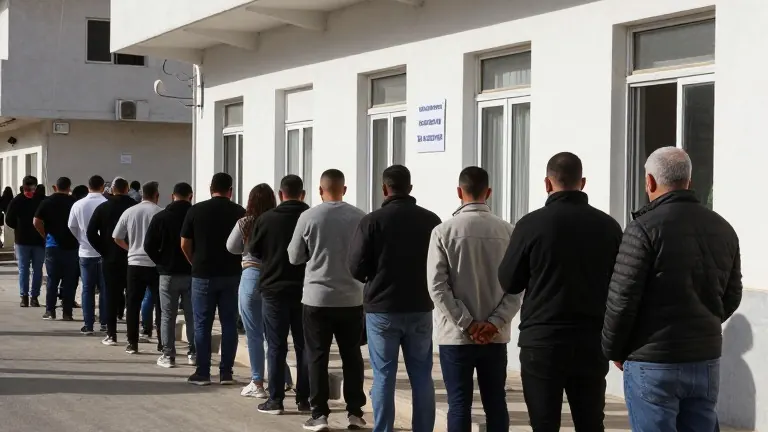
Voting patterns in Israel have shifted sharply as Palestinian citizens of the country turned out in large numbers for the recent parliamentary elections. In several Arab towns, participation rates surpassed 70 percent, a level rarely seen in modern Israeli history.
Historically, turnout in Arab communities has fluctuated between 45 and 65 percent. The current surge has changed the arithmetic of the Knesset. Preliminary reports indicate that the Joint List and the United Arab List, known as Ra’am, could secure up to 17 seats combined. This number is sufficient to prevent Prime Minister Benjamin Netanyahu and his right-wing coalition from reaching the 61-seat majority required to govern.
The surge in voter participation follows a series of contentious moves by the current government. Jewish settlers recently attempted to establish an outpost on Palestinian land in Majd al-Krum, a village in the Upper Galilee. This action galvanized residents who had previously abstained from voting. Hussein Manna, a resident of Majd al-Krum, said the move provoked many who were indifferent to the election. He stated that residents know what awaits them if the current government returns to power.
Netanyahu, National Security Minister Itamar Ben-Gvir, and Finance Minister Bezalel Smotrich targeted Arab voters heavily during their campaign. Netanyahu used AI-generated images of Arab voters to incite his base, a tactic the Joint List called misleading. Right-wing activists were also reported at polling stations in towns such as Taibe, Tira, and Qalansawe. Ahmad Tibi, head of the Arab Movement for Renewal, said these activists obstructed the process to create long lines. He argued the right-wing hoped to tire voters into leaving without casting ballots, but he observed a determination to stay until voting was complete.
If the Arab parties hold their combined 17 seats, they can block Netanyahu from forming a government. Walid al-Omari, Al Jazeera’s bureau chief in Palestine, described the moment as fateful for Netanyahu’s political future and the identity of the state. He warned that keeping the current coalition in power would push Israel further toward extremism. Tibi said the Arab parties’ primary goal is to bring down the government of Netanyahu, Smotrich, and Ben-Gvir. He noted that while other opposition leaders have ruled out an alliance with Arab parties, the Arab bloc is ready to cooperate to prevent Netanyahu from heading a transitional government.
The election outcome has implications beyond Israel’s borders. Netanyahu’s term has been marked by the war in Gaza, where more than 74,500 Palestinians have been killed, as well as military engagements with Syria, Lebanon, and Iran. Political analyst Tariq Hamoud noted that a government without Netanyahu could alter these ongoing conflicts. The election also centers on the security failure of October 7, 2023, which many believe opened the door to these broader wars.
Source: Al Jazeera