UN Peacekeepers Withdraw From Western Sahara After 35-Year Mission
The U.N. Mission for the Referendum in Western Sahara ceased operations on Nov. 1, 2026, following a U.S.-Russia deadlock at the Security Council.
By Henry Wilson ·
The United Nations concluded its 35-year peacekeeping operation in Western Sahara on Sunday, Nov. 1, 2026. The abrupt end to the mission followed a stalemate between the U.S. and Russia at the U.N. Security Council regarding the future of the disputed territory. Stéphane Dujarric, the spokesperson for the U.N. secretary general, confirmed the start of the liquidation period in a statement. A smaller team under the Department of Operational Support will now manage the return of assets and the disposal of equipment.
The mission, known as MINURSO, was established in 1991 to oversee a referendum on self-determination that never took place. Its mandate was repeatedly extended until the current dispute. In the 2026-2027 budget, the force was authorized for 534 personnel with a cost exceeding $62 million. Egypt, Ghana, and Pakistan provided the largest contingents of troops. Twenty MINURSO personnel died during the mission's duration.
The final vote at the Security Council occurred on Friday. Russia vetoed a draft resolution from the U.S. that would have supported Morocco's claim to sovereignty and scheduled the mission's end for next year. A rival Russian proposal to extend the mission was subsequently rejected. This procedural impasse left the U.N. force without a legal mandate to continue operations, forcing an immediate withdrawal.
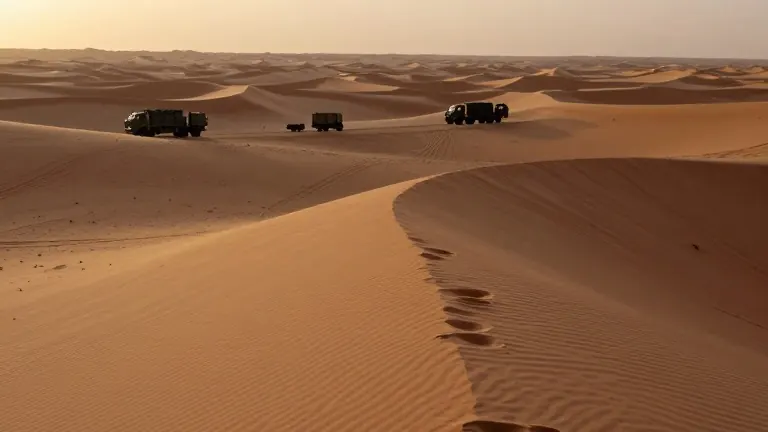
Western Sahara is a desert region along Africa's northwestern Atlantic coast, roughly the size of the U.S. state of Colorado. The territory is rich in minerals and fisheries. Morocco controls nearly the entire area, excluding a narrow strip east of a sand wall built by the Moroccan military. The U.N. classifies the region as a non-self-governing territory, while critics describe it as Africa's last colony.
The conflict originated after Spain ceded control to Morocco in 1975. The subsequent armed conflict lasted more than 15 years and resulted in over 16,000 deaths on both sides, according to the French Senate. The Polisario Front, which seeks independence for the Sahrawi people, operates from refugee camps in Tindouf, Algeria. The group aims to establish an independent Sahrawi Republic.
Morocco's royal palace expressed satisfaction with the mission's non-renewal, describing the peacekeepers as an instrument to internationalize the dispute. Rabat has secured support from Western capitals, including Washington, Paris, and London, which refer to the territory as Morocco's southern provinces. The kingdom often measures its diplomatic relations based on a country's position regarding Western Sahara.
The Polisario Front, backed by Algeria, condemned the decision as unacceptable. The Algerian foreign ministry stated it deeply regrets the move and criticized the perceived bias in the U.S. draft resolution. Algeria hosts the Polisario and views full Moroccan sovereignty as a diplomatic loss. The two nations severed diplomatic ties in 2021.
A U.N.-brokered cease-fire took effect in 1991. The Polisario withdrew from this agreement in 2020 after clashes. The U.N. reported last month that the territory has experienced low-intensity hostilities and tensions since then. The secretary general called on all parties to respect the rights of the people of Western Sahara and to exercise maximum restraint. He expressed concern about the security situation and the risk of escalation.
The end of the mission leaves a vacuum in a region where Morocco and Algeria compete for influence. Algiers arms and funds the Polisario Front, making the territory a central point of rivalry between the two regional powers. The withdrawal of international monitors increases the stakes in this long-standing dispute.
Source: ABC News