Gulf Security: UAE Adviser Says Military Options Lack Quick Exits
At the Manama Dialogue, regional leaders discuss the strain of the Iran conflict and the need for diplomatic progress.
By Elena Vargas ·
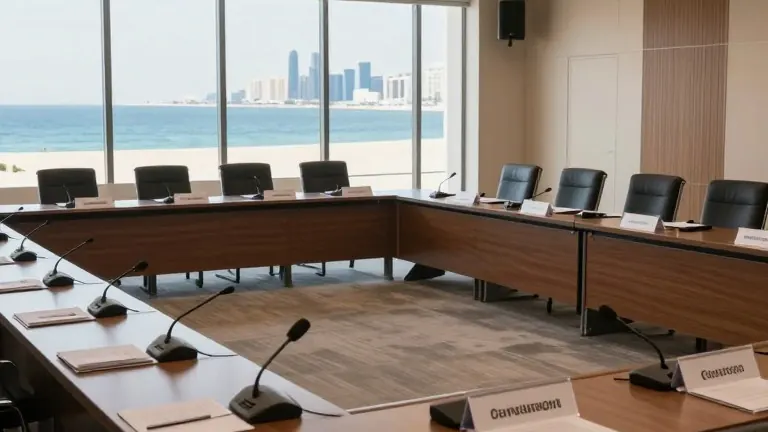
The three-day Manama Dialogue in Bahrain opened against a backdrop of heightened anxiety regarding the ongoing conflict between the United States and Iran. The summit, organized by the International Institute for Strategic Studies, gathered officials from across the Middle East to assess the region's security posture following a year of intense military activity.
Anwar Gargash, a presidential adviser to the United Arab Emirates, addressed the audience on Sunday. He argued that military solutions would complicate an already difficult situation rather than provide a rapid resolution. Gargash stated that the current crisis requires political tools and wisdom, noting that the U.S. and Iranian positions remain far apart.
"If these positions are not bridged, then we have to worry about the worst," Gargash said. He added that the region and Iran are braced for further escalation but do not desire another round of war.
The conflict, which began with joint U.S. and Israeli strikes on February 28, has resulted in substantial military engagement. According to the IISS, the UAE faced over 3,000 drone and ballistic missile attacks before an April ceasefire. Most of these projectiles were intercepted, but the strain on defenses was significant. Bahrain also endured heavy attacks, with 500 drones and nearly 200 ballistic missiles targeting the country, which hosts the U.S. Navy's Fifth Fleet.
Iranian Foreign Minister Abbas Araghchi said negotiators are in Qatar discussing a proposal to reopen the Strait of Hormuz. He emphasized that Iran hopes the U.S. chooses diplomacy and is prepared for both defense and diplomatic outcomes depending on Washington's rationality. Araghchi noted that no direct talks are currently occurring between the two nations.
Bahraini Foreign Minister Abdullatif bin Rashid Al Zayani welcomed efforts to reduce tensions. He described a pattern of Iranian actions, including threats to underwater data cables and attacks by Houthi rebels on Saudi Arabia, as ongoing risks to regional stability. The Houthis have recently escalated strikes on Saudi oil infrastructure and airports in response to Saudi airstrikes in Sanaa.
A major topic at the forum was the lack of a coordinated defense response among the six Gulf Cooperation Council members. Gargash offered a candid assessment, stating that while each nation defended itself independently, the group has not collectively risen to the challenge during this critical crisis.
Source: WKMG-TV