Hillsborough voters decide Florida governor in open contest
With polls open until 7 p.m. Eastern, Tampa and St. Petersburg residents cast ballots in an open governor's race and a special Senate election while watching national midterms.
By Henry Wilson ·
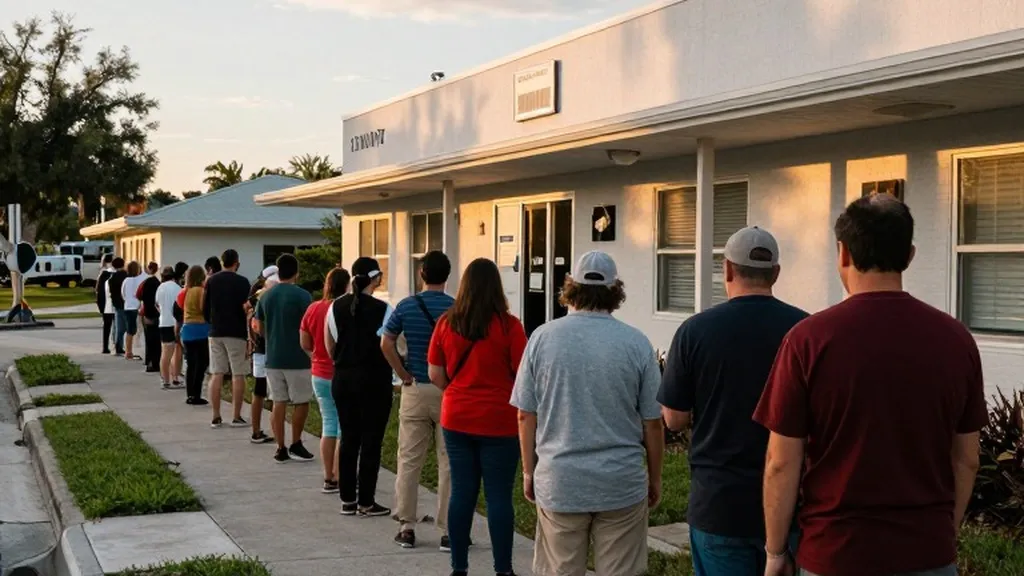
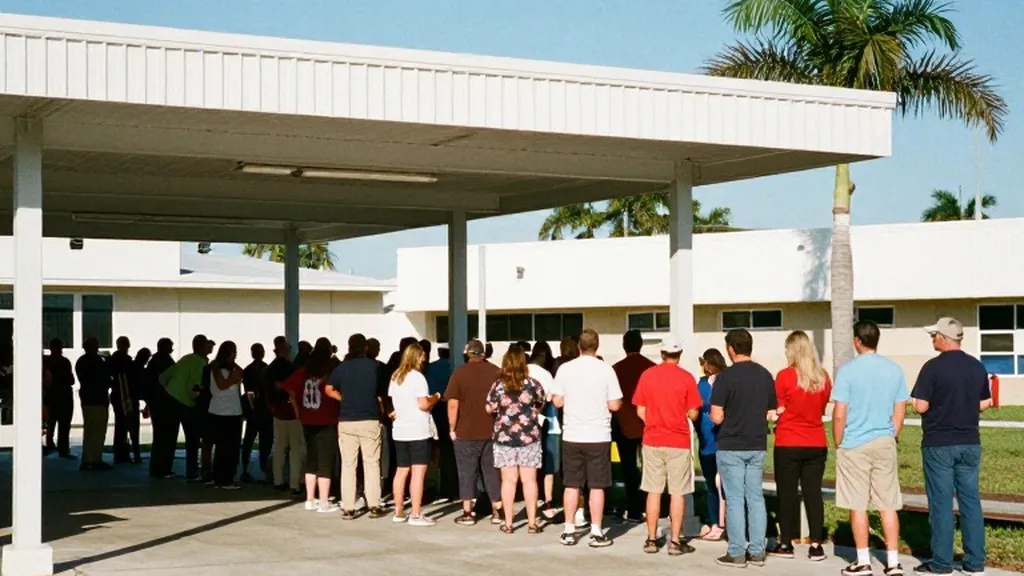
Polls in Hillsborough County opened at 7 a.m. on Tuesday, November 3, 2026, allowing voters in Tampa, St. Petersburg, and Pinellas Park to begin casting their ballots for the 2026 midterm election. The day marks the halfway point of President Donald Trump's second term, and the results will determine which party controls the U.S. House and Senate for the final two years of his presidency. In Florida, the governor's office is an open seat because no incumbent is running, and voters from the Democratic, Republican, Libertarian, and No Party Affiliation parties can cast ballots for the top state executive. The Associated Press describes the election as a referendum on the current administration, with many voters expressing concern over high prices and an unpopular war with Iran.
Florida voters are also deciding a special election for a U.S. Senate seat that will serve the remainder of the term Marco Rubio was elected to in 2022. Ashley B. Moody, a Republican, is on the ballot as the incumbent candidate for this special seat. Ballotpedia notes that the state does not have a regular U.S. Senate election this year, but the special election is part of the broader national contest where 35 Senate seats are up. Republicans currently hold 53 seats in the Senate, while Democrats hold 45 seats plus two independents who caucus with Democrats. Democrats need a net gain of four seats to take control of the chamber, a significant hurdle in a year where Republicans are fighting to hold their majority.
The governor's race in Florida is considered competitive by the Associated Press, which cites the state as one of the key battlegrounds for the office. The AP notes that Democrats are hoping to hold a majority of governorships for the first time in two decades, a status Republicans have held since 2010. In the 2026 cycle, 36 governorships are on the ballot across the country. Heading into the election, Republicans hold 26 governor's offices and Democrats hold 24. Because 19 of these races have no incumbent on the ballot due to term limits or retirements, the dynamics of these contests are shifting, and voters in Tampa Bay are weighing the candidates based on their views on the economy and national policy.
Nationally, all 435 seats in the U.S. House are up for grabs. Republicans currently hold 218 seats, while Democrats hold 214. Democrats need a net gain of three districts to achieve a majority in the House, while Republicans can lose no more than two seats to maintain control. Ballotpedia counts 46 battleground districts in this race, with 25 held by Democrats and 21 by Republicans. In Florida, every U.S. House seat is on the ballot, and the state is using a new congressional map following mid-decade redistricting. This change in district lines is a factor in the competitiveness of races across the state, including those in the Tampa Bay area.
Voters in Florida are also weighing several ballot measures that will impact state finances and property taxes. Amendment 1 proposes increasing the amount of funds that can be retained in the budget stabilization fund from 10% to 25% of net general revenue. Amendment 2 would exempt agricultural-related tangible personal property, such as farm equipment, from property taxes. Amendment 3 focuses on local government and property taxes, proposing to increase the homestead tax exemption and decrease the cap on how much the assessed value of non-homestead properties can increase. These measures are particularly relevant for homeowners in Tampa and St. Petersburg who are concerned about their property tax bills.
The Associated Press reports that more than 57 million people had already voted as of Monday, surpassing the early vote totals from four years ago in many closely watched states. In Florida, polls are open from 7 a.m. to 7 p.m. Eastern time. The state is divided between the Eastern and Central time zones, but the 7 p.m. closing time applies to the entire state for the purpose of the general election. Voters in line when polls close are entitled to vote, and the U.S. Postal Service has added hours and staff to ensure mail ballots are counted on time. A federal judge temporarily barred the Trump administration from carrying out a plan to prevent noncitizen voting, a move that critics say risks disenfranchising eligible voters.
Republican and Democratic leaders are bracing for a tight race that could be decided by a handful of seats. RNC Chairman Joe Gruters stated that everything depends on turnout, while DCCC Chair Rep. Suzan DelBene said the American people are angry and want change. The AP notes that one or two seats could tip either chamber of Congress. If Democrats win control of at least one chamber, investigations and possible impeachment proceedings become likely. House Democratic Leader Hakeem Jeffries would be the first Black speaker and has outlined a 100-day agenda focused on the cost of living and oversight. A strong Democratic night would also boost potential 2028 candidates and complicate the path for Vice President JD Vance.
Money is playing a significant role in the 2026 elections, which are likely to be the most expensive in history. Republican committees have outraised and outspent Democratic committees, helped by Trump-affiliated groups and Elon Musk. However, at the candidate level, Democrats have outraised their opponents. An analysis of AdImpact data by the AP shows that 88.1% of Republican general election TV ad spending went to states and districts that Trump won in 2024. This includes more than $850 million spent in areas where he won by 10 points or more. In Florida, which Trump won by a significant margin in 2024, these advertising efforts are intense, influencing how voters in Hillsborough and Pinellas counties perceive the candidates.