Breaking: Election Day is here! Make your selections for Hillsborough and Pinellas
Voters in Tampa and St. Petersburg head to the polls to decide the governor and House seats, while the nation weighs the future of Congress.
By Aisha Khan ·
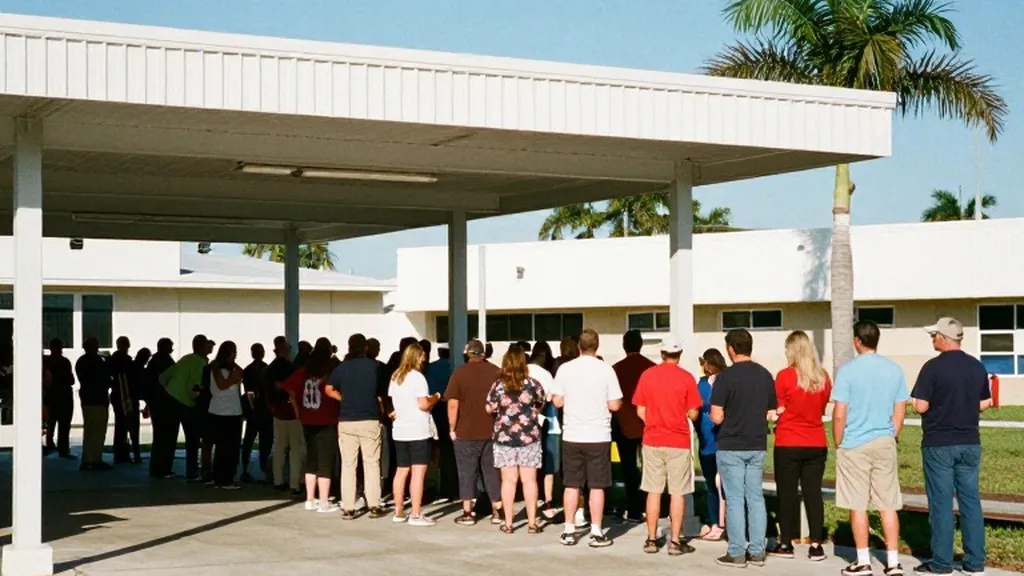
Election Day has arrived in Florida, with polls opening at 7 a.m. and closing at 7 p.m. on Tuesday, November 3. Residents of Tampa, St. Petersburg, and Pinellas Park are heading to their local polling places to cast ballots that will determine the next governor and all state congressional representatives. According to Ballotpedia, Florida is divided between the Eastern and Central time zones, so voters should verify their specific location's hours if they are on the border of the two zones. The state is seeing a high volume of interest in this midterm cycle, which occurs halfway through President Donald Trump's second term.
In Hillsborough and Pinellas counties, the governor's race is a major focal point. This is an open seat with no incumbent running, and the ballot includes candidates from the Democratic, Libertarian, No Party Affiliation, and Republican parties. The Associated Press has identified the Florida governor's race as competitive, noting that it is one of the key state offices being decided today. Voters in the Tampa Bay area will also select every U.S. House seat in the state, along with various state and local offices that vary by county. There is no U.S. Senate election in Florida this year, as the state is not holding a regular or special race for that chamber.
Nationally, the stakes are high as voters decide who controls Congress for the final two years of the current presidential term. All 435 seats in the U.S. House are up for grabs, with Republicans currently holding 218 seats and Democrats holding 214. Democrats need a net gain of three districts to secure a majority, while Republicans can afford to lose no more than two seats. Ballotpedia counts 46 battleground districts in the House, with 25 held by Democrats and 21 by Republicans. The outcome of these races will significantly impact the legislative agenda and oversight capabilities of the new Congress.
The U.S. Senate is also seeing significant action, with 35 of 100 seats on the ballot. This includes 33 regular elections and two special elections for the remainder of the terms held by Marco Rubio of Florida and JD Vance of Ohio. Republicans hold 53 seats, while Democrats hold 45, plus two independents who caucus with Democrats. Democrats need a net gain of four seats to take control of the Senate, a threshold that makes the races in states like Georgia, Iowa, and Michigan particularly critical. Winners in these races will begin their six-year terms on January 3, 2027, setting the stage for the next legislative session.
Governor races are on the ballot in 36 states, with Republicans currently holding 26 governor's offices and Democrats holding 24. Of the offices on the ballot this year, each party holds 18. Nineteen of these races do not feature an incumbent, as 15 governors are term-limited and others have chosen not to run. Democrats are hoping to hold a majority of governorships for the first time in two decades, a goal that has eluded them since 2010. The outcome of these state races will influence local policies and the overall balance of power in state governments across the country.
The mood in the country is described by the Associated Press as a referendum on the president's second term, with many voters expressing frustration over high prices and an unpopular war with Iran. Polling from AP-NORC indicates that 35 percent of U.S. adults approve of the president's job performance, while only 25 percent approve of his handling of the economy. About seven in ten adults say the country is heading in the wrong direction, with most blaming the president for rising costs. This sentiment is driving voter engagement, with more than 57 million people having already voted as of Monday, surpassing early voting totals from four years ago in many closely watched states.
Political parties are bracing for the results, with Republicans fighting to hold the Senate and Democrats aiming for a win in the House. The Associated Press notes that one or two seats could tip the balance in either chamber, making every vote count. Republicans were bracing to lose the House, a pattern that often occurs in midterm elections, while Democrats have been described as cautiously optimistic. The party in power typically faces challenges in these off-year elections, but redistricting efforts and strong fundraising may alter the traditional outcomes in some districts.
President Trump has been actively campaigning across the country, holding dozens of rallies to mobilize his base. His final rally before the election took place in Salina, Kansas, where he urged voters to pretend he was on the ballot. His schedule included stops in Mississippi, South Carolina, and Texas, key states where the House and Senate races are closely contested. Many Republican candidates have kept their distance from the president's more polarizing statements, focusing instead on local issues and voter turnout. The president has also continued to make claims about voting fraud, including concerns about noncitizen voting, which has led to legal challenges in several states.
Money is playing a significant role in this election cycle, with the 2026 elections likely to be the most expensive in history. Republican committees have outraised and outspent Democratic committees, aided by Trump-affiliated groups and support from Elon Musk. However, at the candidate level, Democrats have outraised their opponents. Analysis of advertising data shows that 88.1 percent of Republican general election TV ad spending went to states and districts that Trump won in 2024. This heavy spending reflects the high stakes involved in maintaining or gaining control of the legislative branch.
Voters are encouraged to find their polling place at vote.gov or their state election office to ensure they are going to the correct location. Anyone who is in line when polls close at 7 p.m. is entitled to vote, so arriving early is recommended to avoid long waits. Identification rules vary by state, so voters should check their specific state's requirements before heading to the polls. The U.S. Postal Service has added hours, staff, and special lines to ensure that mail-in ballots are counted on time, reflecting the importance of timely results in this high-stakes election.
In Florida, voters should note that the state is split between time zones, which may affect local event times or news broadcasts. The governor's race is particularly watched because it is an open seat, and the winner will shape the state's direction for the next four years. Local offices and measures will also be decided, impacting services and policies in Tampa, St. Petersburg, and Pinellas Park. The results of these local races will be felt in schools, transportation, and community development, making them as important as the statewide and national contests.
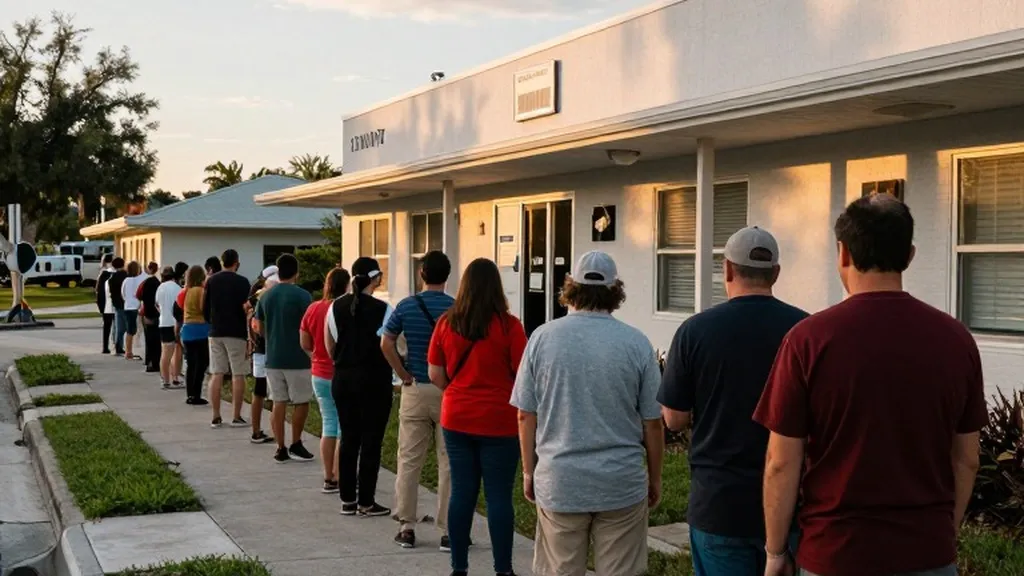
As polls open, the energy in the state is palpable, with long lines forming in some areas and a high level of civic engagement. The Associated Press has quoted RNC Chairman Joe Gruters, who said, "Everything depends on turnout. If we turn out our voters, we win, and that's what we've been planning for." DCCC Chair Rep. Suzan DelBene offered a contrasting view, stating, "The American people are angry. They want change." These statements capture the divided mood of the electorate, with voters on both sides feeling strongly about the direction of the country.