Tampa voters face tight House race as national margin narrows
In Hillsborough and Pinellas counties, voters decide the fate of 435 House seats in a contest where Republicans can lose only two districts to keep control.
By Elena Vargas ·
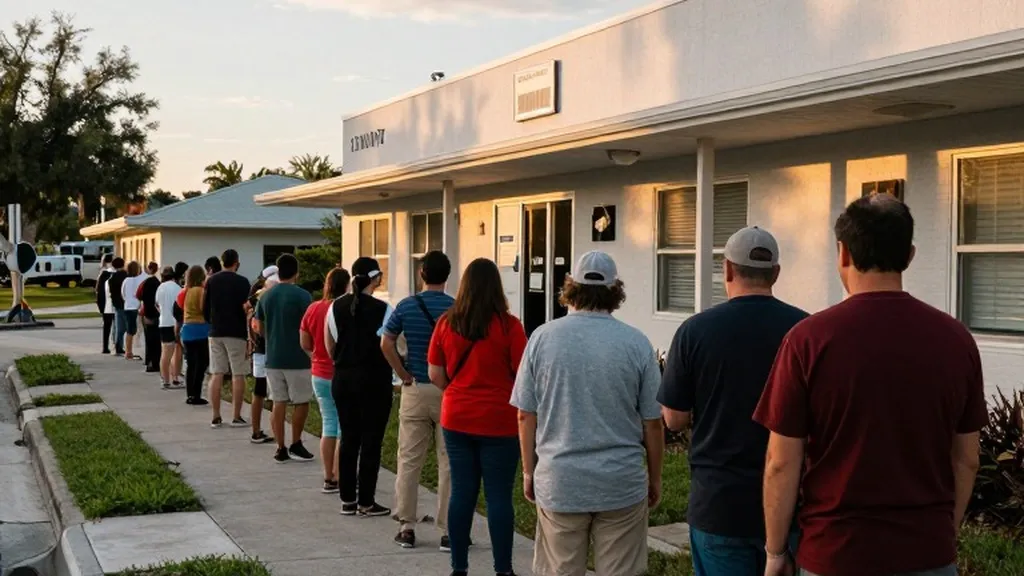
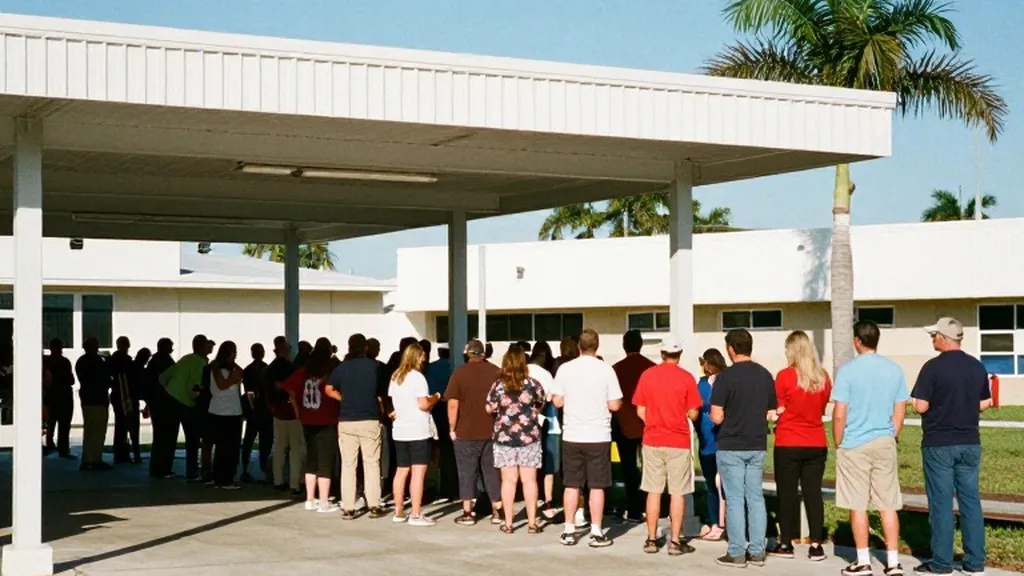
Voters in Tampa, St. Petersburg, and Pinellas Park will cast their ballots between 7 a.m. and 7 p.m. on Tuesday, navigating a ballot that includes every U.S. House seat in Florida alongside a competitive gubernatorial race. According to Ballotpedia, Florida polls operate across two time zones, with the eastern part of the state opening and closing on the Eastern Time schedule. Residents in the Tampa Bay area can verify their specific polling location through vote.gov, and those in line when polls close are entitled to vote regardless of when they began waiting. The state also features three ballot measures addressing budget stabilization, agricultural tax exemptions, and property tax limits, adding local weight to the federal contest.
The national stakes for this election are defined by a razor thin margin in the U.S. House of Representatives, where all 435 seats are up for grabs. Republicans currently hold 218 seats, while Democrats hold 214, leaving a three seat gap that determines which party controls the chamber. This narrow separation means Republicans can afford to lose no more than two net districts to maintain their majority, a threshold that has intensified scrutiny on the 46 battleground districts identified by Ballotpedia. These districts, split between 25 Democratic and 21 Republican incumbents, represent the primary theater of conflict for both parties as they seek to shift the balance of power in the final two years of President Donald Trump's second term.
The competitive nature of the House race is further complicated by the redrawing of congressional maps in seven states, including Florida, California, Missouri, North Carolina, Tennessee, Texas, and Ohio. Ballotpedia notes that these new maps may not align with the historical voting patterns of the previous districts, creating uncertainty for candidates and strategists alike. In Florida specifically, the new configurations add a layer of complexity to a state that is already viewed as a critical battleground. The Associated Press reports that one or two seats could tip the balance in either chamber, making every vote in these redrawn districts potentially decisive for the composition of Congress.
While the House race dominates the immediate narrative, voters in Tampa and across the nation are also deciding the control of the U.S. Senate, where 35 seats are contested. Republicans hold 53 seats, Democrats 45, and two independents caucus with Democrats, meaning Democrats need a net gain of four seats to achieve a majority. The Associated Press describes the election as a referendum on the president's second term, with many voters expressing frustration over high prices and an unpopular war with Iran. Polling from AP-NORC indicates that 35% of U.S. adults approve of Trump's job performance, while about 7 in 10 say the country is heading in the wrong direction, a sentiment that is driving engagement in both the House and Senate races.
The financial scale of this midterm election is expected to set a new record, with the Associated Press noting that it will likely be the most expensive in history. Republican committees have outraised and outspent their Democratic counterparts, aided by Trump affiliated groups and contributions from Elon Musk, though Democrats have outraised their opponents at the individual candidate level. This influx of funds is reflected in the advertising spend, with 88.1% of Republican general election TV ad spending directed at states and districts that Trump won in 2024. The sheer volume of money involved underscores the high stakes of the election, as both parties pour resources into the 46 battleground districts and the 13 competitive Senate races.
In Florida, the governor's race is also a point of significant interest, with the seat open and no incumbent running. The Associated Press identifies the race as competitive, with candidates from the Democratic, Republican, Libertarian, and No Party Affiliation parties on the ballot. This race is part of a broader national contest for 36 governorships, where Democrats seek to gain a majority of governor's offices for the first time in two decades. The outcome of these local and state races will influence the political landscape in Florida, a state that has been a focal point for national political strategy in recent years.
Voter turnout is a critical factor in this election, with more than 57 million people having already cast their ballots as of Monday, surpassing early vote totals from four years ago in many closely watched states. RNC Chairman Joe Gruters has emphasized that turnout is the key to victory, stating that if Republicans turn out their voters, they will win. In contrast, DCCC Chair Rep. Suzan DelBene has described the American people as angry and seeking change, a message that resonates with voters like James Moore, a librarian in Raleigh, North Carolina, who cited rising taxes and healthcare costs as primary concerns. The high level of early voting suggests a highly engaged electorate, which could impact the final tally in the tight House races.
The election also features a series of legal and administrative challenges that could affect the final results. A federal judge temporarily barred the Trump administration from implementing a plan to prevent noncitizen voting, a move that critics argue risks disenfranchising eligible voters. Additionally, a judge ordered the administration to stop demanding that California election officials segregate ballots cast by people on lists of suspected noncitizens. The U.S. Postal Service has added hours and staff to ensure mail ballots are counted on time, a logistical effort that is crucial for states that rely heavily on mail-in voting. These developments highlight the ongoing tension between federal oversight and state authority over elections.