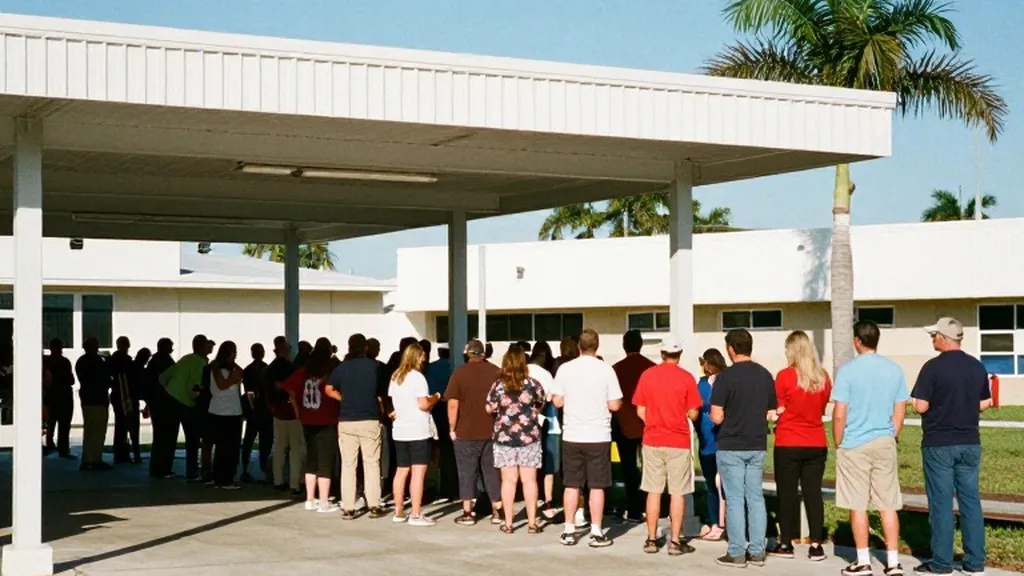
Tampa voters face 7 a.m. to 7 p.m. poll hours in key midterm
Residents in Tampa, St. Petersburg, and Pinellas Park should verify ID requirements and expect lines as Florida decides its governor and congressional seats.
By Henry Wilson ·
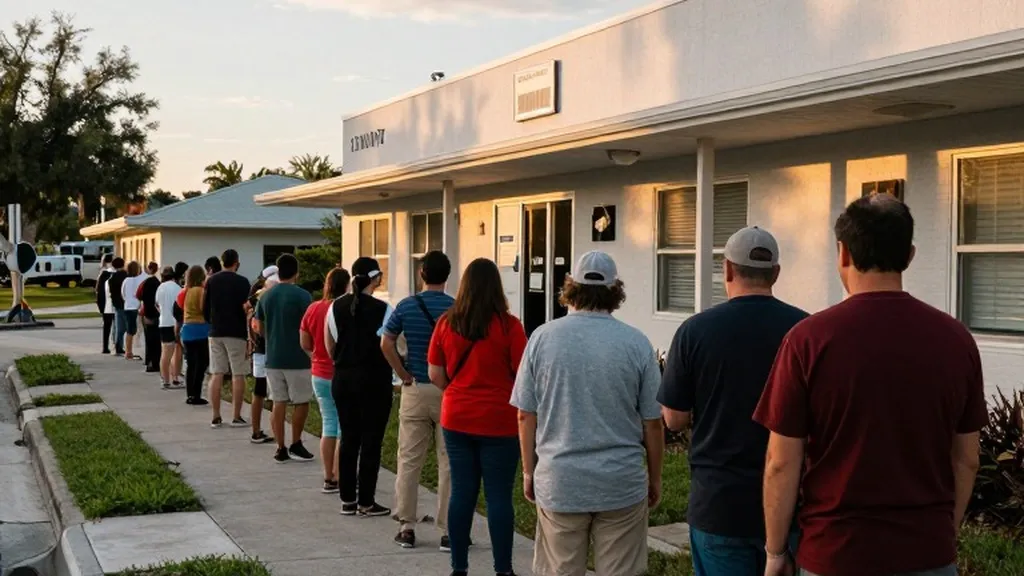
Voters in Tampa, St. Petersburg, and Pinellas Park have a full day ahead on Tuesday, November 3, 2026, as polling places open at 7 a.m. and close at 7 p.m. local time. According to Ballotpedia, Florida is divided between the Eastern and Central time zones, meaning the end time for polling places varies by county. Residents should confirm their specific location and time zone requirements before heading to the polls to ensure they arrive while voting is still open.
The stakes in Florida are high as the state decides its next governor and all of its U.S. House seats. The governor's race is an open seat with no incumbent running, and the ballot includes candidates from the Democratic, Libertarian, No Party Affiliation, and Republican parties. Voters in Hillsborough and Pinellas counties will also choose representatives for every U.S. House seat in the state, along with various state and local offices that vary by county.
For those who have not yet cast a ballot, finding the correct polling place is the first step. The U.S. government recommends using vote.gov or contacting the local state election office to locate the designated site. Once at the polling place, voters should be aware that identification rules vary by state. In Florida, voters should check specific ID requirements to avoid delays. Anyone who is in line when the polls close is entitled to cast a vote, so arriving early is not strictly required if a line forms, but knowing the cutoff time is essential.
Mail ballots remain a significant part of the election process in many states, though Florida primarily relies on in-person voting and early voting. The U.S. Postal Service has added hours, staff, and special lines to ensure that mail ballots received by the deadline are counted on time. This logistical effort is part of a broader federal push to manage the volume of ballots expected in the midterm elections, which are halfway through President Donald Trump's second term.
Nationally, the election is viewed as a referendum on the current administration's performance. According to the Associated Press, voters are struggling with high prices and are angry over an unpopular war with Iran. AP-NORC polling indicates that 35% of U.S. adults approve of Trump's job performance, while about seven in ten say the country is heading in the wrong direction. These sentiments are driving voter turnout, with more than 57 million people having already voted as of Monday, surpassing early vote numbers from four years ago in many closely watched states.
The control of Congress is the central political question. All 435 U.S. House seats are up for election. Democrats currently hold 214 seats and need a net gain of three districts to secure a majority. Republicans hold 218 seats and can lose no more than two to maintain their majority. In the Senate, 35 seats are up for grabs, including special elections for the rest of the terms of Marco Rubio in Florida and JD Vance in Ohio. Democrats need a net gain of four Senate seats to take control, while Republicans can only afford to lose two.
Florida is one of several states using new congressional maps after mid-decade redistricting. This change, also seen in California, Missouri, North Carolina, Tennessee, and Texas, may affect how districts vote compared to previous cycles. Republicans have tried to use redistricting to beat the historical midterm pattern where a president's party usually loses seats. However, the Associated Press notes that new districts in Florida and elsewhere may not vote as drawn, adding an element of uncertainty to the final tallies.
In the governor's race, the AP calls Florida a competitive battleground. The open seat means no incumbent is defending the office, creating an opportunity for either party to make a statement. The ballot includes multiple parties, reflecting the diverse political landscape in the state. Voters in Tampa and its neighboring cities are part of a larger demographic that analysts believe will be pivotal in determining the outcome of the state's executive branch for the next four years.
As voters line up at polling places in Hillsborough and Pinellas counties, they are joining a national effort to decide the direction of the government. The U.S. Postal Service continues to monitor mail ballot processing, while federal judges have intervened in some states to clarify rules on voter eligibility and ballot segregation. These administrative details, while technical, play a crucial role in ensuring that every eligible vote is counted and that the election proceeds smoothly across the country.
The election is also a moment for voters to express their views on the economy and foreign policy. In Florida, local ballot measures may include issues related to budget stabilization and property taxes, which are concerns for many homeowners in the region. The combination of federal, state, and local decisions makes this a comprehensive exercise in democracy. As the day progresses, the focus will shift from the logistics of voting to the anticipation of results that will shape the final two years of the current presidential term.
Voters in Tampa, St. Petersburg, and Pinellas Park should remember that the polls close at 7 p.m. local time. Checking the specific rules for identification and location via vote.gov is the most practical step to ensure a smooth voting experience. The outcome of this election will determine who controls Congress and the governor's office in Florida, with implications that extend to national policy and local governance alike.