No Clear Winner in Israel's First Post-War Election
Polls project a split 120-seat parliament with neither side reaching the 61 needed to govern, forcing complex coalition talks.
By Aisha Khan ·
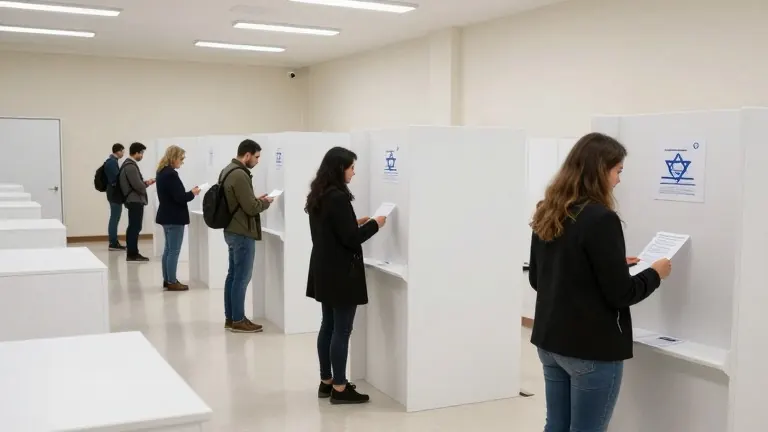
Israelis cast ballots on Tuesday in the first national election since the October 2023 attacks, with polls suggesting neither major bloc will secure a governing majority. The 120-seat Knesset requires 61 votes to form a government, and pre-election surveys indicate a fragmented result that leaves the next administration undefined.
The pro-Netanyahu coalition, anchored by Likud, includes far-right parties Otzma Yehudi and Religious Zionism-Zehut, led by ministers Itamar Ben-Gvir and Bezalel Smotrich. The bloc also features the ultra-Orthodox United Torah Judaism and Shas. Their rivals, the opposition, unite four movements: Gadi Eisenkot's Yashar, Yair Golan's Democrats, Avigdor Lieberman's Yisrael Beiteinu, and Naftali Bennett's Together alliance, which Yair Lapid has joined.
A KAN poll conducted before the Friday publication ban showed the opposition leading with 52 projected seats against 50 for Netanyahu's bloc. The remaining 18 seats are projected to go to unaffiliated parties, primarily the Arab-majority lists Ra'am and the Joint List. Both major camps have ruled out partnering with these groups for the immediate future, creating a path to a minority government or a second election if coalition talks stall.
Voters face a choice amid deep domestic divisions. Criticism targets reported security failures preceding the 2023 attacks, the ultra-Orthodox exemption from military service, and Netanyahu's judicial reforms. Mairav Zonszein, a senior analyst at the International Crisis Group, stated that secular and liberal factions view this vote as the last chance to save Israeli democracy.
Netanyahu, who has held power for 15 of the last 17 years, faces personal risks. He is under trial for corruption charges brought in 2019 and holds an International Criminal Court arrest warrant for war crimes. A defeat would leave him vulnerable in his legal proceedings and could influence an inquiry into the 2023 events. His rivals have suggested he may remain in office as caretaker if no majority forms.
International pressure has increased, with allies sanctioning West Bank settlements and dozens of envoys walking out of Netanyahu's September 24 UN address. About 7.3 million citizens are eligible to vote, including 1.2 million Palestinian Israelis. Campaigners aim for 70 percent turnout among Arab communities, a level that could secure 15 seats for their parties despite a recent Supreme Court reversal of a ban on Ra'am and the Joint List.
Source: Al Jazeera
More Politics · World news · Report a business · Got a Story?